Author: ahvc

  • Strengthening Alliances

    We are pleased to join the AHM Coalition as its newest partner organization!

    Logos of various organizations within the Acupuncture and Herbal Medicine Coalition, including CCAHM, ACAHM, American Society of Acupuncturists, AHVC, and NCBAHM, with a central emblem featuring a plant and acupuncture needle.

    The mission of the AHVC is to present our unified view on critical issues impacting acupuncture and herbal business practices affecting this vital industry, while continuing to support the stability and growth of the profession at large.

    According to an AHM spokesperson, our inclusion brings an important industry perspective that complements the AHM Coalition’s existing representation of education, accreditation, certification, and professional practice through its founding members ICCAHM, ACAHM, NCCAOM, and the ASA.

    We’re happy to be on board!

    “As vendors, we serve a vital link between manufacturers, practitioners, educators, and patients. By joining the AHM Coalition, we’re helping to strengthen the profession and ensure that access to safe, high-quality Acupuncture and Herbal Medicine products remains strong and sustainable.

    —David Jones, L.Ac. MSOM, of the AHVC

  • AHVC @ 2026 AHA National Convention

    AHVC officers gather at the recent 2026 American Society of Acupuncturists (ASA) in Minneapolis, MN.

    AHVC officers at the 2026 ASA Convention in Minneapolis
    AHVC Officers, from left: Co-vicechair Greg Pepping (Kan); Co-vicechair Carly Rodriguez (Treasure of the East); Secretary Janet Borges (Mayway); Chair Bill Martin (Far East Summit). Missing: Pei Li (Blue Poppy), Treasurer.

  • Prominent role for herbs, supplements in new 2026 Dietary Guidelines

    The Department of Health and Human Services (HHS) and Department of Agriculture (USDA) have issued the much-anticipated 2025-2030 Dietary Guidelines for Americans.

    In a major departure from previous editions, the guidelines have been shortened by more than 90% and streamlined to provide broad information intended to be directly accessible to American consumers.
     
    Notwithstanding this simplification, the new guidelines prominently mention the use of herbs as a flavor enhancer for proteins, fruits, and vegetables, and recognize that members of many special populations may need dietary supplements to meet their nutritional needs.
     
    “We’re thrilled that the guidelines acknowledge the vital role of herbs and dietary supplements in a healthy diet,” said Graham Rigby, President & CEO of the American Herbal Products Association (AHPA). “AHPA will continue its outreach to ensure herbs and herbal products are recognized and appreciated for the benefits they bring to all Americans.”

  • AHPA-advocated WIN for our industry! FDA signals intent to amend DSHEA disclaimer requirements

    An Industry Win for AHPA

    The American Herbal Products Association (AHPA) applauds a major step toward sensible regulatory reform outlined in a LETTER released today from the U.S. Food and Drug Administration (FDA) to the dietary supplement industry. The letter signals the agency’s intent to amend the labeling regulation that currently requires the Dietary Supplement Health and Education Act of 1994 (DSHEA) disclaimer to appear on every panel of a dietary supplement product label where structure/function claims appear.
     
    This significant action comes directly in response to sustained advocacy from AHPA dating back to and continuing since 2021. AHPA and others have argued that the existing “every panel” requirement (found in 21 C.F.R. § 101.93(d)) is overly prescriptive and exceeds the demands of DSHEA. AHPA has long advocated for FDA to update the regulation to reflect historical industry practice: prominently displaying the disclaimer once on the product label or labeling, not necessarily on every panel, and connecting each claim to the disclaimer via symbols (e.g., asterisks). The contemplated revision would also accord the technical requirements of the regulation with FDA’s historical enforcement approach; as conceded in the letter, and consistent with AHPA’s analysis of agency documents, FDA has “rarely, if ever, enforced this requirement.”
     
    “This news is a major win for the dietary supplement industry,” said AHPA President & CEO Graham Rigby. “AHPA has long led the charge for this sensible regulatory reform, and we thank FDA for taking action on an unenforced provision that has fueled opportunistic litigation. This is a strong, positive signal of the agency’s commitment to modernizing regulations, and AHPA looks forward to continued engagement in shaping a rational and modern regulatory environment for this vital category of products.”
     
    Recognizing that formally amending the regulation through the rulemaking process will take time, FDA also stated that the agency will exercise enforcement discretion regarding the “every panel” DSHEA disclaimer requirement, providing immediate relief to industry from this unnecessary burden.

    “This news is a major win for the dietary supplement industry. AHPA has long led the charge for this sensible regulatory reform, and we thank FDA for taking action on an unenforced provision that has fueled opportunistic litigation.

    “This is a strong, positive signal of the agency’s commitment to modernizing regulations, and AHPA looks forward to continued engagement in shaping a rational and modern regulatory environment for this vital category of products.”
    —AHPA President & CEO Graham Rigby.

    Read this Blogpost on AHPA >>

  • Some Tariff Relief!

    The efforts and advocacy of AHPA’s Government & Regulatory Affairs prevails!

    As part of an Executive Order issued November 14, 2025, the White House has revised and expanded the set of commodities in the Harmonized Tariff Schedule (HTS) that are exempt from reciprocal tariffs.

    These changes, reflected in updates to “Annex II” and “Annex III,” partially target commodities that cannot be sourced within the United States.
     
    Of particular note, many tea and spice commodities in Chapter 9 of the HTS that were previously in Annex III are now in Annex II and fully exempt from the reciprocal tariff regime. Also subject to relief were certain coffee and tea extracts under Chapter 21. These include major naturally unavailable commodities that have been at the core of American Herbal Products Association’s (AHPA) trade relief advocacy, including green and black tea (Camellia sinensis), cinnamon, ginger, and turmeric.
     
    The revisions to the code were retroactively applied to goods “entered for consumption or withdrawn from warehouse for consumption” on or after November 13, 12:01 AM Eastern time. The order clarifies that refunds are available through standard methods for goods for which duties were already collected.“
     
    It appears that our advocacy, specifically regarding cinnamon and turmeric, has resonated with policymakers,” said Robert Marriott, AHPA Vice President of Government & Regulatory Affairs. “We’re thankful for this relief from tariffs on unavailable natural resources, which benefits both American businesses and the health of Americans. Numerous other herbal goods that cannot be grown within our borders are also in need of tariff relief.”
     
    Copies of the newly updated Annex II and Annex III are now available from the AHPA TARIFF TOOLKIT, as well as an updated document showing which major herbal tariff codes are impacted by the changes.
     
    AHPA will continue its advocacy seeking tariff relief for herbal products that cannot be sourced from the United States in quantities necessary to meet demand.

    “It appears that our advocacy, specifically regarding cinnamon and turmeric, has resonated with policymakers,” said Robert Marriott, AHPA Vice President of Government & Regulatory Affairs. “We’re thankful for this relief from tariffs on unavailable natural resources, which benefits both American businesses and the health of Americans. Numerous other herbal goods that cannot be grown within our borders are also in need of tariff relief.”

  • Is Acupuncture keeping up with the national trend?

    Is Acupuncture keeping up with the national trend?

    by Rick Polito, editor-in-chief, Nutrition Business Journal

    The practitioner channel could be the most solid bet in supplements.

    But for 2020, when office visits for anything short of emergency care felt like a dicey proposition, practitioner channel sales growth practically defines “steady.” In Nutrition Business Journal (NBJ) projections captured in the just-published 2025 Supplement Business Report, practitioner channel growth in 2024 is estimated at 7.8%, following 7.7% in 2023 and 7.6% in 2025. Back in 2022, when the overall industry dropped to 2%, the lowest NBJ ever tracked, practitioner sales were chugging along at 7.2%.

    Steady, right?

    Part of what makes this practitioner growth important to watch, despite the lack of dramatic swings, is how the growth allows the channel to grab an increasing share of the market. In 2021, as the channel emerged from lockdown, growing at 6.5%, sales accounted for 8.3% of the market. In 2024, NBJ estimates practitioner sales represented 9.2% of the market. If projections hold, it will claim 9.7% in 2028.

    At that point, it would be even with multilevel marketing sales, but if we wind back to 2020, MLMs took a much higher slice of the pie with 14.3% of the pie.

    Steady, it turns out, matters.

    Some of what made the recent growth possible, however, would have seemed anathema to the channel’s core players not long ago. Up until the mid-2010s, “professional” brands were fighting to keep their supplements sold only through practitioners. The biggest challenge was Amazon, where practitioners were signing up as third-party sellers, a phenomenon that had brands that were loyal to the channel’s origins racing around trying to keep sales in-office.

    Now every major practitioner brand sells direct-to-consumer. Brands that were anti-Amazon stalwarts now have their own Amazon stores.

    That doesn’t mean practitioners selling practitioner brands have gone away. Naturopaths and other alternative-medicine healers are heavily dependent on supplement sales to keep their offices open. In NBJ’s 2023 Practitioner Report, one out of six practitioner respondents said supplement sales represented 40% or more of their revenue. Three in 10 said the sales accounted for 20% to 40% of sales.

    That contingent of what are basically highly motivated and trusted brand ambassadors is key to the success of the channel. While the number of consumers who take practitioners’ advice on supplements is not a large share of all supplement consumers, they can be a very loyal group.

    Loyal enough to make supplements the most solid bet in supplements..

  • PROTECT ACCESS to WELLNESS: Tariffs on Essential Herbs Threaten Americans’ Health Choices

    PROTECT ACCESS to WELLNESS: Tariffs on Essential Herbs Threaten Americans’ Health Choices

    The AHPA urges policymakers to support tariff exemptions for certain essential herbs and herbal ingredients from plants that cannot be cultivated domestically. These herbs and ingredients are used in dietary supplements, conventional foods, and personal care products by millions of Americans to support their health and wellness.

    For example, cinnamon, native to Sri Lanka, requires tropical climates with high humidity and temperatures between 70-90ºF for stable growth.

    Turmeric, native to India and Southeast Asia, grows best in warm humid climates with temperatures between 68-95ºF and requires 8-10 months of frost-free conditions. …

    Read on…

    Download the flyer >

  • AHPA’s Response to Executive Order 14257, Annex II: DIETARY INGREDIENTS

    AHPA’s Response to Executive Order 14257, Annex II: DIETARY INGREDIENTS

    In a meeting with the United States Trade Representative, AHPA received confirmation that commodities included in Annex II of the Executive Order on TARIFFS that were not already subject to Section 232 duties were selected to be subject to investigation and the potential imposition of import controls.

    AHPA’s category of concern within Annex II’s long list of Commodities is DIETARY INGREDIENTS. This category includes vitamins, amino acids, and other substances used in the creation of products manufactured and sold by AHPA members such as dietary supplements and personal care products. An imposition of import controls on the Dietary Ingredients listed in Annex II would adversely impact AHPA members.

    On May 2, 2025, AHPA responded to a request for public comments on Section 232: National Security Investigation of Imports of Pharmaceuticals and Pharmaceutical Ingredients. Read AHPA’s FULL Response >>

    Points of discussion in AHPA’s response include:

    • Domestic capacity for Annex II dietary ingredients production is limited.
    • Import controls on Annex II dietary ingredients will do harm to national security.
    • Domestic production of Annex II dietary ingredients is better driven by positive trade measures.

  • Tariffs Threaten US Market for Traditional Chinese Medicine — NYT

    Tariffs Threaten US Market for Traditional Chinese Medicine — NYT

    by Aimee Ortiz, New York Times, Photos by Andres Kudacki
    May 9, 2025

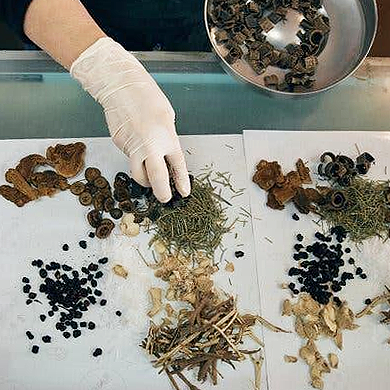
    “How Do I Survive?” — TCM Dispensary owners say a protracted trade war would harm a niche but popular sector in which imported herbs are prescribed to treat colds, pain and other ailments.

    …Traditional Chinese medicine is just one of many industries that has been upended by the tariffs and the uncertainty over when, or whether, they may be lifted. Already, fewer ships are arriving in American ports, and consumers could begin seeing empty shelves by June… read rest of article >>

  • AHPA’s Letter to the President

    AHPA’s Letter to the President

    Signed by Graham Rigby, President & CEO, American Herbal Products Association

    Read the whole letter here >>

    Excerpt: “…We are particularly concerned that significant tariff increases or retaliatory trade actions could restrict the availability of key botanicals used not only in dietary supplements but also in herbal teas and personal care products. The loss of access to critical herbal commodities would have the effect of driving the American herbal industry out of the broader international market, ceding ground in a growing industry to our global competitors. To protect consumer access and preserve our competitive advantage, we respectfully urge you to exempt essential herbs and herbal ingredients from the current tariff regime. We would gladly provide information on the tariff codes most in need of exemption. …”